Introduction
Television has changed significantly over the years. For decades, viewers have relied on traditional broadcasting methods such as satellite, cable, and aerial signals to watch their favourite programmes. However, with the growth of internet technology, a different way of accessing television content has become increasingly common.
This has led many people to compare IPTV vs traditional TV and understand how both options work.
Traditional TV and IPTV both provide access to television content, but they use different delivery methods. Traditional television relies on broadcast infrastructure, while IPTV uses internet networks to deliver digital content to compatible devices.
For beginners, understanding the difference between IPTV and TV can help explain why these services work differently, what equipment is required, and what factors should be considered before choosing a viewing method.
In this guide, we will compare IPTV and traditional television, explain how each technology works, and highlight the key differences between their delivery methods, equipment requirements, flexibility, and internet needs.
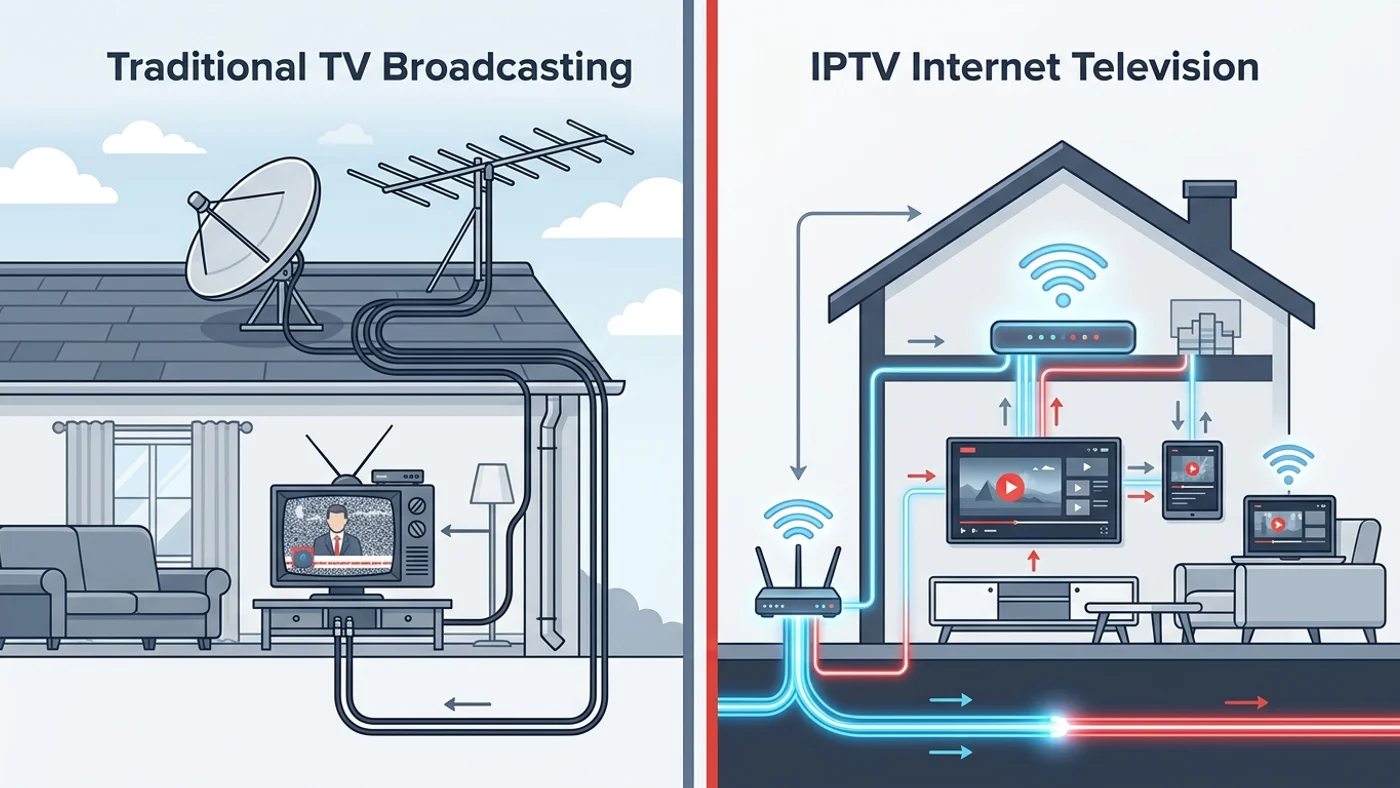
What Is Traditional TV?
Traditional TV refers to the conventional methods used to deliver television content before internet-based streaming became widely available.
For many years, television has mainly been delivered through three common methods:
Satellite Television
Satellite TV uses signals transmitted from satellites orbiting the Earth. A satellite dish receives these signals and sends them to a television receiver, allowing users to access available channels and programmes.
This method has been widely used because it can provide television access in many locations where other broadcasting methods may not be available.
Cable Television
Cable TV delivers television signals through physical cable networks.
A cable connection is installed at a property, allowing users to access television services through compatible equipment.
Cable systems have traditionally provided households with a structured television service through a fixed connection.
Terrestrial / Aerial Television
Terrestrial television uses broadcast signals transmitted from land-based towers.
Users receive these signals through an aerial connected to their television equipment.
This method remains a common way for people to access free-to-air television channels in many regions.
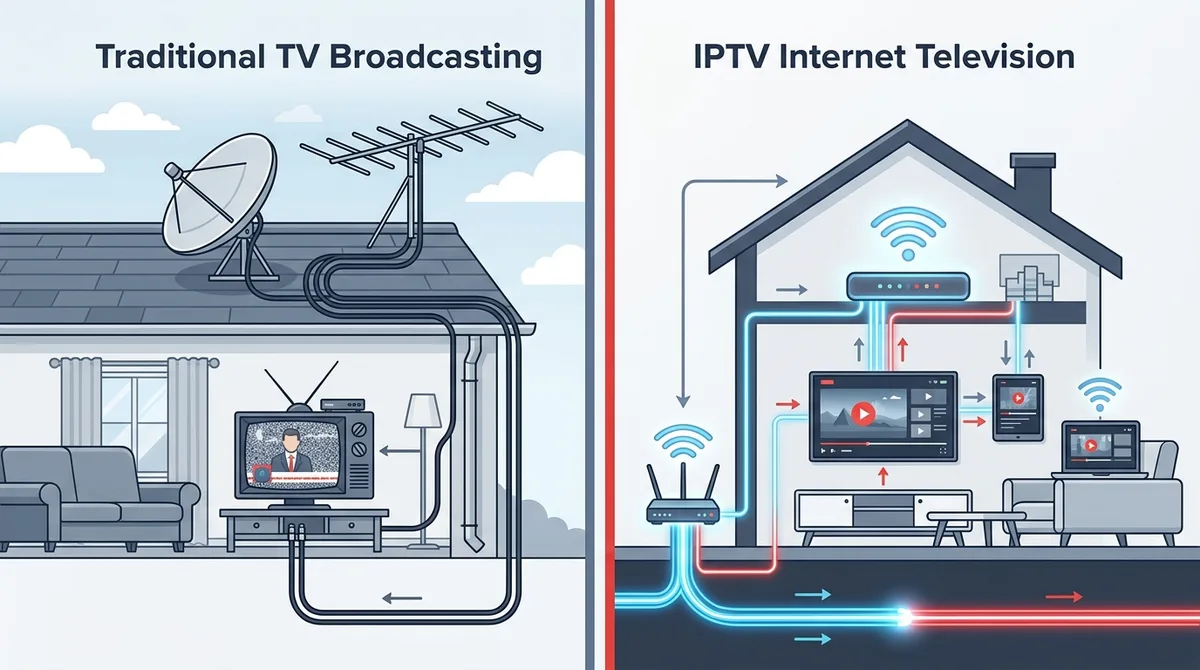
Traditional TV has been used for many years and remains familiar to millions of viewers. However, the way people access entertainment has continued to evolve with internet-based technologies.
What Is IPTV?
IPTV stands for Internet Protocol Television.
Unlike traditional broadcasting methods, IPTV delivers television and video content through internet networks.
Instead of receiving signals through a satellite dish, cable connection, or aerial, IPTV uses internet technology to transmit digital content to compatible devices.
Traditional TV uses broadcast signals.
IPTV uses internet networks.
IPTV can be accessed through different types of internet-connected devices, depending on the service and setup requirements. These may include:
- Smart TVs
- Streaming devices
- Smartphones
- Tablets
- Computers
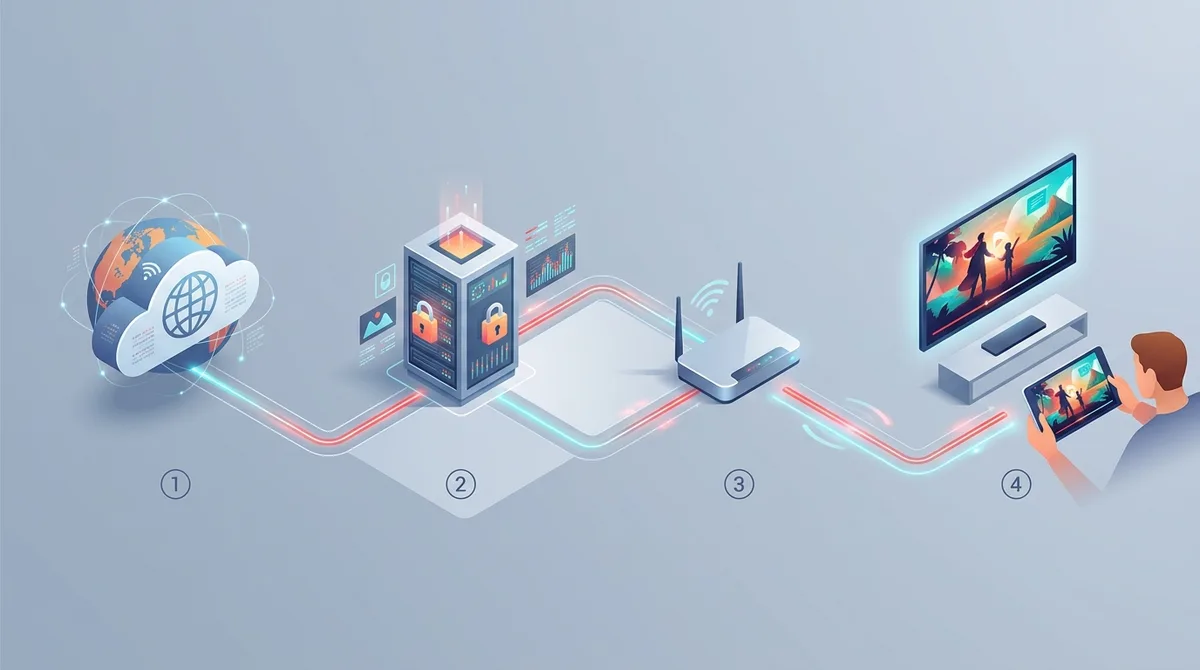
To understand the underlying streaming architecture in more detail, learn how IPTV works. If you are brand new to internet protocol television, start with our complete What Is IPTV beginner's guide.
IPTV vs Traditional TV: Main Differences
The biggest difference between IPTV and traditional TV is the way content reaches the viewer.
Traditional television depends on broadcast infrastructure, while IPTV uses internet-based delivery.
| Feature | Traditional TV | IPTV |
|---|---|---|
| Delivery method | Satellite, cable, or aerial signals | Internet connection |
| Technology | Broadcast transmission | Internet Protocol technology |
| Equipment required | TV equipment and broadcast connection | Internet-connected compatible device |
| Flexibility | Usually linked to specific broadcast equipment | Can work across different device categories |
| Internet requirement | Usually does not use internet delivery | Requires an internet connection |
| Setup approach | Broadcast equipment installation | Device and service setup |
Delivery Method
Traditional TV
Traditional TV delivers content through physical broadcasting systems. Examples include:
- • Satellite signals
- • Cable networks
- • Terrestrial broadcasting
The viewer receives the signal through the required equipment.
IPTV
IPTV delivers content through internet networks.
The content is transferred digitally and accessed through compatible devices connected to the internet.
The delivery method is one of the main reasons why IPTV and traditional television provide different viewing experiences.
Equipment Required
Traditional TV Equipment
Traditional television normally requires:
- • Television set
- • Satellite dish, cable connection, or aerial
- • Required receiver equipment where applicable
The equipment depends on the type of traditional television service being used.
IPTV Equipment
IPTV generally requires:
- • Internet connection
- • Compatible device
- • Suitable IPTV application or player where required
The exact requirements can vary depending on the device and service setup.
To explore all supported screens and media boxes, check compatible devices.
Flexibility
Traditional TV Flexibility
Traditional TV is usually connected to a specific broadcasting setup.
For example, a satellite television setup normally requires the relevant satellite equipment installed at the viewing location.
IPTV Flexibility
IPTV can provide access through different internet-connected devices. Depending on compatibility and setup, users may access IPTV services through:
- • Smart TVs
- • Streaming devices
- • Mobile devices
- • Computers
This allows IPTV to fit different viewing environments.
Internet Requirement
Traditional TV
Traditional television usually receives content through broadcast methods rather than internet delivery.
Some modern television services may include online features, but the main delivery method is traditionally based on broadcast systems.
IPTV
IPTV relies on internet networks to deliver content. This means users need:
- • A suitable internet connection
- • A compatible device
- • Correct setup information
Internet availability is an important factor when considering IPTV.
Setup Approach
Traditional TV Setup
Traditional TV setup often involves installing physical equipment such as:
- • Satellite dishes
- • Cable connections
- • Aerial systems
The process depends on the type of television service.
IPTV Setup
IPTV setup usually focuses on:
- • Preparing a compatible device
- • Using the required application/player
- • Following service setup instructions
For detailed configuration steps, read the setup guide for step-by-step instructions.
Advantages And Considerations Of IPTV
IPTV provides a different approach to accessing television content through internet technology.
Possible Benefits Of IPTV
One possible advantage of IPTV is that it can support different categories of internet-connected devices. Users may access services through devices that fit their viewing preferences.
Because IPTV uses internet networks, it does not depend on traditional broadcast equipment such as satellite dishes or aerial systems.
Depending on the service and supported devices, IPTV can provide flexibility in how users access content.
Things To Consider With IPTV
Although IPTV provides a different viewing method, users should consider:
IPTV requires an internet connection because content is delivered through online networks.
Users should ensure their preferred device supports the required setup.
The setup process can vary depending on the device being used.
Advantages And Considerations Of Traditional TV
Traditional television has been used for decades and remains a familiar viewing method.
Possible Benefits Of Traditional TV
Many users are already comfortable with traditional television systems and equipment.
Satellite, cable, and terrestrial broadcasting systems have been widely available for many years.
Things To Consider With Traditional TV
Traditional TV often depends on specific equipment such as satellite dishes, cable connections, or aerial systems.
Traditional television is usually connected to a specific broadcast setup rather than multiple internet-connected devices.
IPTV vs Traditional TV: Which One Should You Choose?
There is no single option that is suitable for every viewer. The right choice depends on individual circumstances, including:
Personal Preferences
Some users prefer traditional television because they are familiar with the setup and viewing experience.
Others may prefer internet-based options because they want flexibility across compatible devices.
Available Equipment
The equipment already available can influence which option is more practical.
Internet Access
IPTV requires an internet connection, while traditional broadcasting methods generally rely on different infrastructure.
Viewing Habits
Users should consider how and where they prefer to watch television content.
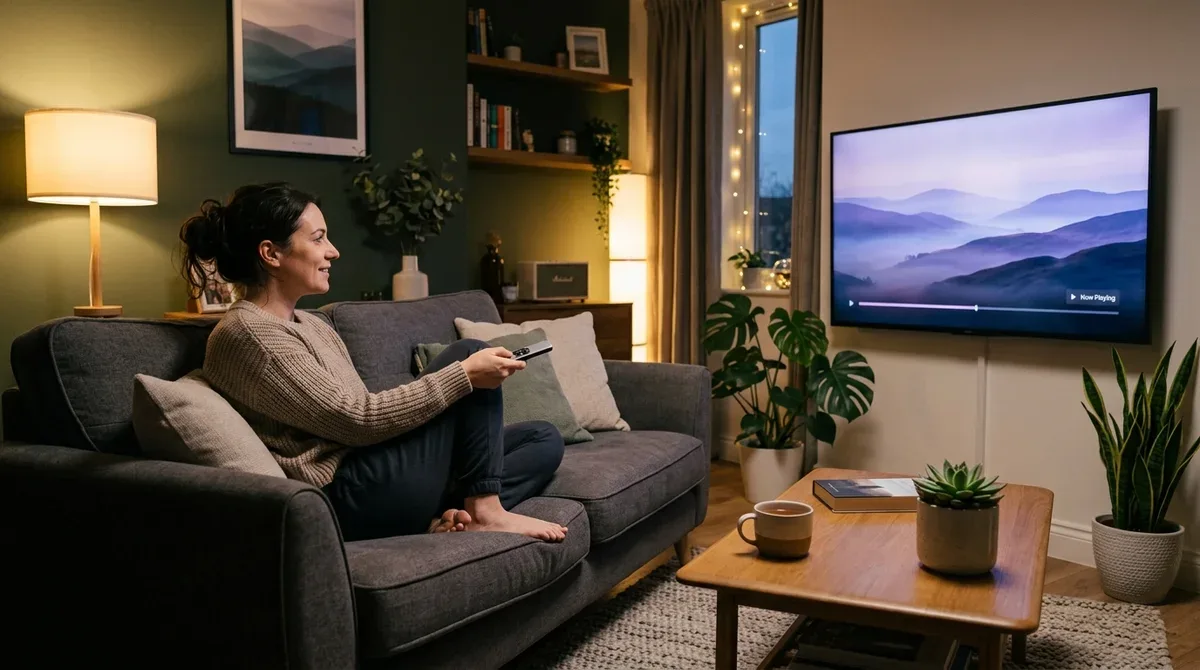
Understanding these differences helps users choose the option that matches their own requirements.
What Do You Need Before Choosing IPTV?
Before choosing IPTV, users should consider several important factors.
Compatible Device
Check whether your preferred device supports IPTV access. Common categories include:
- • Smart TVs
- • Streaming devices
- • Smartphones
- • Tablets
- • Computers
Always verify your operating system version and hardware decoding support before installing streaming apps.
Internet Connection & Stability
Since IPTV uses internet technology, a steady broadband connection (minimum 25–50 Mbps for 4K) is required to prevent stuttering.
Experiencing playback drops? See our guide to troubleshooting IPTV buffering and errors.
Service Information
Users should review:
- • Available service details
- • Support options
- • Setup information
Setup Requirements
Understanding the setup process before starting can help avoid confusion.
Most devices simply require downloading an IPTV media player and entering your M3U playlist or Xtream Codes credentials.
Frequently Asked Questions
Common questions regarding IPTV and traditional television differences
What is the difference between IPTV and traditional TV?
Is IPTV the same as cable TV?
Does IPTV need internet?
Does traditional TV need internet?
Can IPTV work on Smart TV?
Is IPTV better than traditional TV?
What should I check before choosing IPTV?
Want To Learn More About IPTV?
Understanding the difference between IPTV and traditional television is the first step.
If you want to explore IPTV further, you can learn:
- • How IPTV works
- • Which devices support IPTV
- • How to set up IPTV
Independent Service Disclaimer
Sky Glass IPTV UK is an independent service and is not affiliated with, endorsed by or sponsored by Sky. Sky and Sky Glass are trademarks of their respective owners.
Related Articles
What Is IPTV? A Complete Beginner's Guide
Learn what IPTV means, how internet protocol television works, how it compares with traditional TV, and what devices are needed to start streaming.
IPTV Not Working? Common Problems & Troubleshooting Guide
When IPTV is not working or buffering, simple checks can help. Learn common connection issues, device restarts, player fixes, and when to contact support.
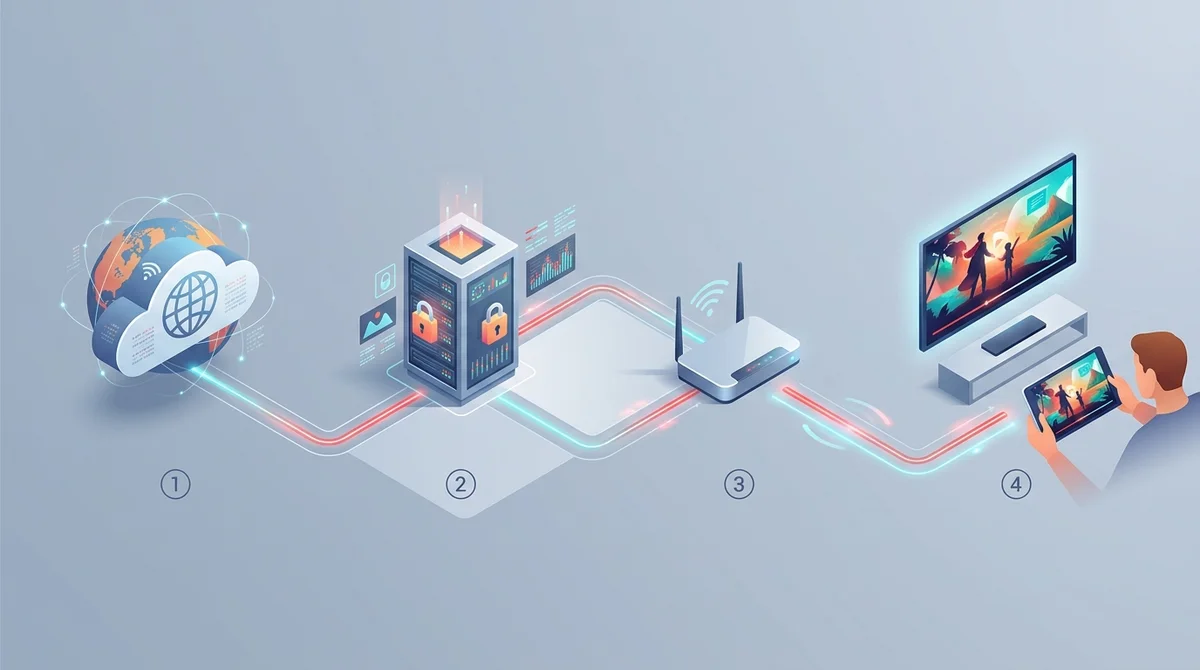
How Does IPTV Work? Internet Television Explained
Learn how IPTV works, how internet television delivers content, what devices are needed, and how IPTV differs from traditional broadcasting.
Get a 24-Hour Free Trial
Experience 35,000+ live channels and 4K sports with instant activation directly on WhatsApp.